Blog
Learning French, one question at a time.
Full answers to the questions my learners ask me — method, levels, exams, everyday life in French.
English-French false friends you should know
Casserole, éventuellement, supporter, store… The English false friends that trip you up daily, their real meaning in French and how to avoid them.
Read the article →What level of French do you need to work in France?
eam working in English: solid A2 to B1. Job in French or with clients: B2. Residence permit: A2 or B1 since 2026. The details, situation by situation.
Read the article →Bien que, quoique, pour que: why the subjunctive?
Bien que or même si, pour or pour que, quoique or quoi que: how to choose, mistakes to avoid and examples explained, sentence by sentence.
Read the article →Is a 25-minute French class enough to progress?
Yes, if you stay regular. What happens during those 25 minutes, who this format suits, when I recommend 50 minutes instead, and the right pace.
Read the article →Passé composé or imparfait: how to choose?
The imparfait sets the scene, the passé composé tells what happened. The rule, four situations to decide, signal words and a story explained.
Read the article →DELF, DALF, TCF, FIDE: which French exam to take?
DELF or DALF for a lifelong diploma, TCF or TEF for France or Canada, FIDE for Switzerland. Plus what France has required since 2026, explained.
Read the article →Learning French: how many hours per level?
From 80 hours for A1 to 900 for C1, according to published benchmarks. But your pace changes everything: what I see in my lessons, and how to estimate your own timeline.
Read the article →I understand written French but not spoken: why?
In French, you pronounce fewer letters than you write, and words run into each other. The four reasons, and how I train your ear in my classes.
Read the article →How to find out your French level (A1 to C1)
Compare what you can do with the European levels, A0 to C1: what each one looks like, why you rarely have just one level, and a free online test.
Read the article →Tu or vous in French: which one to use?
Tu for people close to you, vous for strangers; when in doubt, vous. But when do you switch to tu? Plus the two mistakes I hear most in class.
Read the article →Why did I create thefleow?
I created thefleow to offer my own French classes on a website that reflects who I am: private lessons, conversation workshops, and a private space.
Read the article →
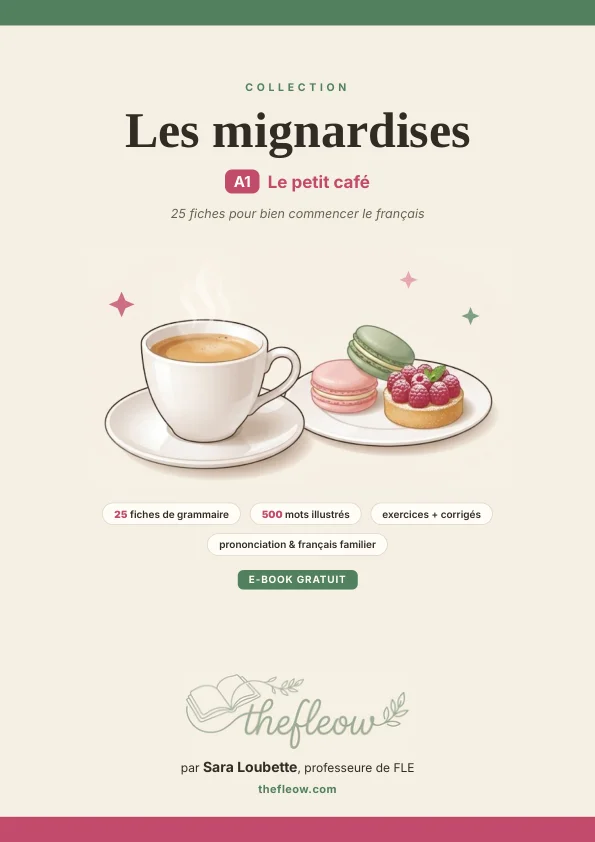 A1Le petit café25 worksheets to get off to a good start in French
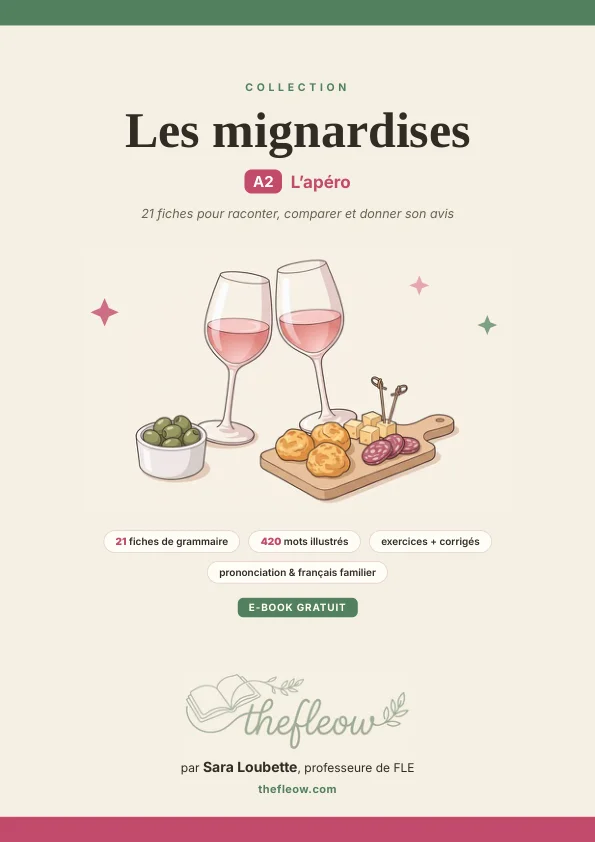 A2L'apéro21 worksheets to tell stories, compare and give your opinion
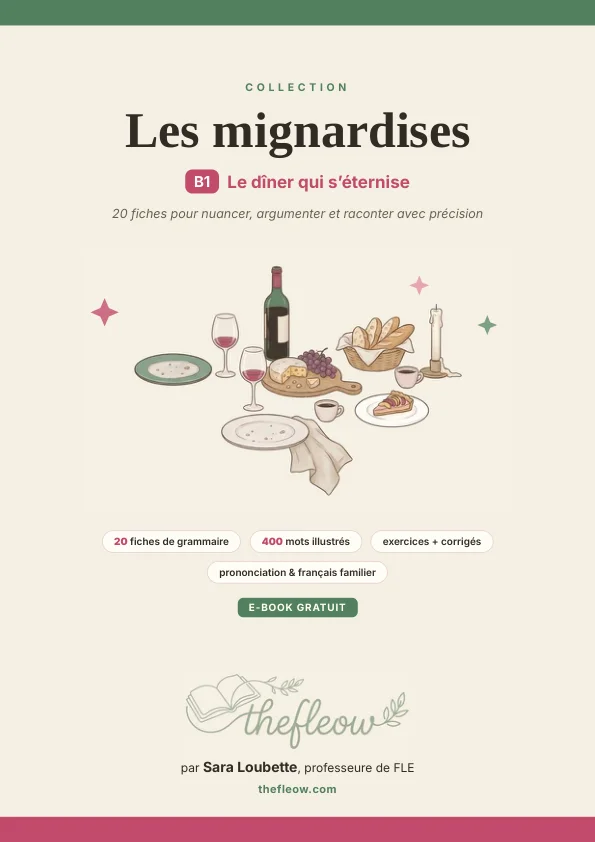 B1Le dîner qui s'éternise20 worksheets to add nuance, argue and tell stories precisely
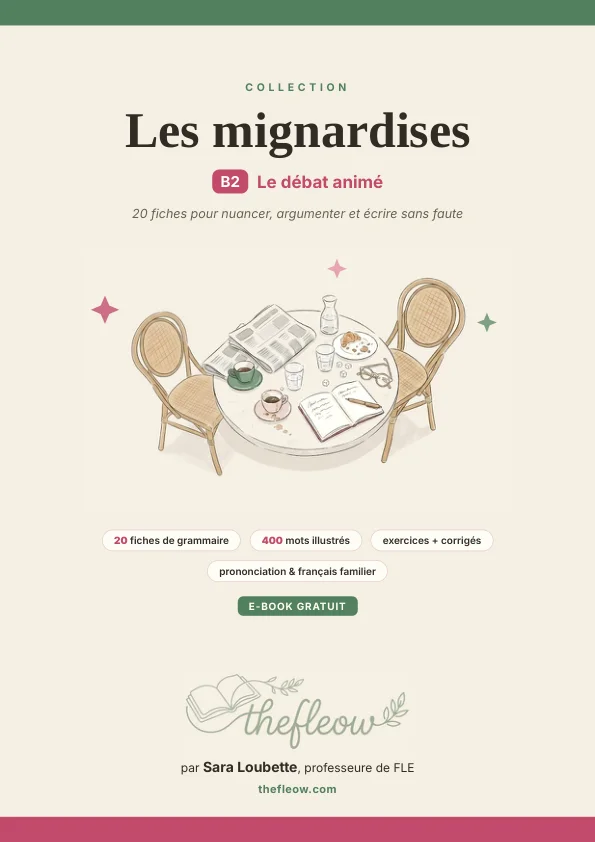 B2Le débat animé20 worksheets to add nuance, argue and write without mistakes
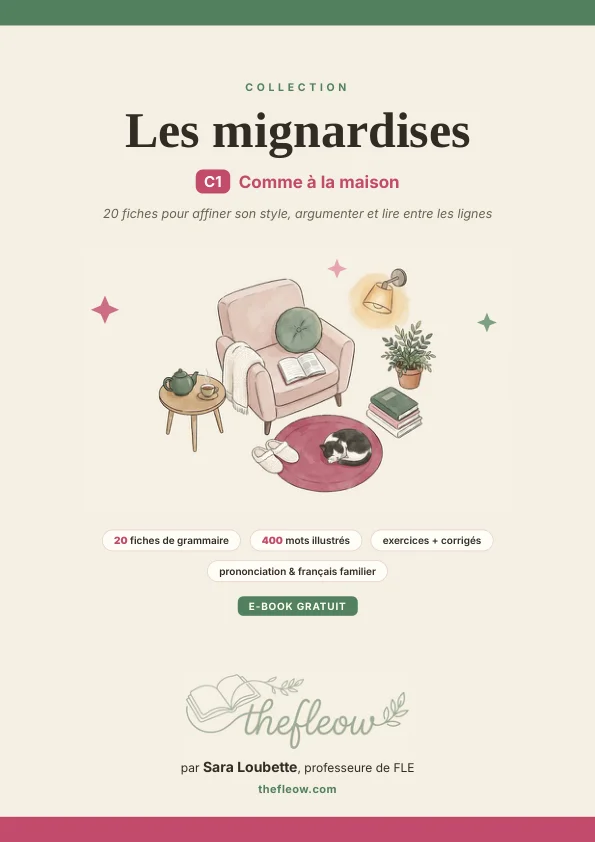 C1Comme à la maison20 worksheets to refine your style, argue and read between the lines